
 +86-151 6876 5707

Industrial Box Furnace
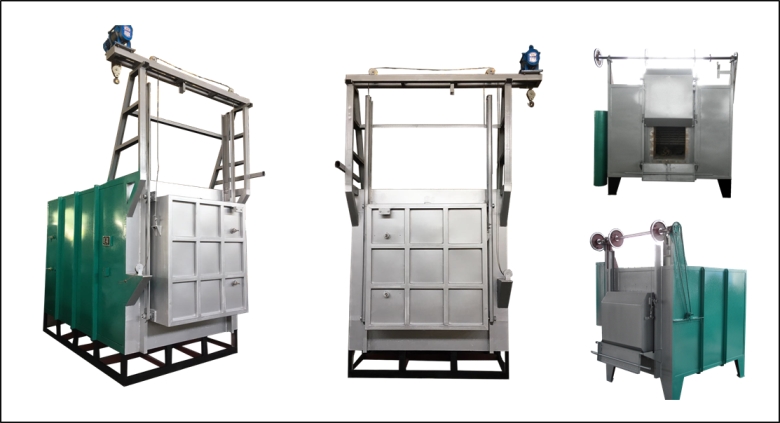
COOLDO FLEXIBLE BATCH HEAT TREATMENT
Industrial Box Furnace for Annealing, Tempering, Normalizing and Steel Hardening
The COOLDO industrial box furnace, also called a chamber furnace, is a flexible batch furnace for carbon steel, alloy steel, tool steel, high-speed steel, castings, forgings and machined components. Electric resistance, direct-fired gas and indirect-fired configurations can be engineered for low-temperature tempering at 650°C through high-temperature heat treatment at 1200°C.
- 650 / 950 / 1200°C
- Low-, medium- and high-temperature classes
- ±1°C Controller
- Legacy controller accuracy reference
- Electric or Gas-Fired
- Heat source selected by process and utilities
- Custom Chamber
- Working zone sized around part and fixture
What Is an Industrial Box Furnace?
An industrial box heat treatment furnace is a fixed-hearth batch chamber with a front-loading door. Parts are placed on the hearth or on fixtures, the door is closed and interlocked, and the controller executes a programmed heating, soaking and cooling cycle. It is suited to low-volume production, varied part geometry, frequent recipe changes and processes that do not require a continuous conveyor.
The box furnace provides the heating stage for annealing, tempering, normalizing, stress relieving, solution heat treatment and hardening. When rapid quenching is required, the hot load must be transferred to an external water, oil, polymer, salt or forced-air quench system engineered for the alloy and maximum transfer time.
- Production mode
- Flexible single-chamber batch heat treatment.
- Door options
- Vertical lift or swing-out insulated door.
- Heating options
- Electric resistance, direct gas or indirect gas firing.
- Typical materials
- Carbon steel, alloy steel, tool steel and high-speed steel.
Industrial Box Furnace Configurations
Temperature class and heat source are selected from the process atmosphere, load, available utilities and operating cost.
Low-Temperature Tempering Furnace
This 650°C industrial box furnace is designed for tempering, stress relieving, preheating and other controlled low-temperature batch processes.
- Suitable for low- and medium-temperature steel tempering
- Optional forced-air circulation for load uniformity
- Lower stored heat and faster production response
- Programmed ramp, soak and controlled cooling
Electric Resistance Box Furnace
Resistance-wire elements are arranged around the chamber to provide clean, controllable heat for general steel heat treatment.
- Typical annealing, tempering and normalizing
- Multi-zone power control where required
- No combustion products in the chamber
- Easy recipe and ramp-soak programming
High-Temperature Chamber Furnace
High-temperature elements, insulation, hearth and door seals are selected for demanding hardening and heat-treatment cycles.
- Resistance wire or silicon carbide elements by design
- Refractory and fiber lining matched to temperature
- Over-temperature protection thermocouple
- Fixture and hearth loading verified at temperature
Gas-Fired Box Furnace
Direct or indirect firing can provide high heat input for larger chambers when fuel is more practical than connected electrical power.
- Natural gas, LPG or approved fuel gas
- Burner management and flame supervision
- Indirect firing when combustion contact is unsuitable
- Exhaust and emissions engineered for the site
Box Furnace Structure, Controls and Safety
The furnace body, door, heating system and controls are designed as one interlocked batch-processing system.
Insulated Steel Chamber
A welded steel shell supports ceramic-fiber or mixed refractory insulation selected for temperature, load and service life.
Lift or Swing Door
The reinforced insulated door may lift vertically or swing outward; seals limit heat loss and protect temperature uniformity near the opening.
Zoned Heating System
Electric elements or gas burners are positioned to balance heat input around the usable work zone and the expected load pattern.
Hearth and Load Support
The refractory hearth, tray, fixture or roller arrangement is sized for total batch weight and high-temperature strength.
Temperature Control
PID or PLC controls manage ramp, soak and alarms. A separate thermocouple provides independent over-temperature protection.
Door and Heating Interlocks
Heating, burner operation and door movement are interlocked to prevent unsafe opening, firing or accidental operation.
Atmosphere note: a standard box furnace is not a vacuum furnace and is not automatically gas-tight. Protective atmosphere processing requires a specifically sealed chamber, retort or muffle, purge system, pressure control, exhaust and safety interlocks.
Typical Batch Heat Treatment Cycle
The recipe must be qualified from the alloy specification, section thickness, load arrangement and required mechanical properties.
Prepare the Load
Confirm alloy, cleanliness, fixture strength, spacing, batch weight and thermocouple positions.
Load and Interlock
Place the batch in the usable zone, close the door and verify the safe interlocked condition.
Controlled Ramp
Heat at the specified rate while monitoring furnace and load temperature.
Equalize and Soak
Begin soak only after the load reaches the required temperature and uniformity criteria.
Cool or Transfer
Cool in the chamber or transfer to the specified external quench without exceeding the allowed time.
Inspect and Record
Retain cycle data and verify hardness, dimensions, microstructure or other acceptance results.
RX3 Industrial Box Furnace Reference Models
The original COOLDO product page publishes the following electric 380 V, three-phase models. These are reference configurations only; final power, temperature uniformity, loading capacity, chamber dimensions and element rating must be confirmed for each project.
| Model | Rated power | Phase | Voltage | Temperature class | Working zone L × W × H |
|---|---|---|---|---|---|
| RX3-15-9Q | 15 kW | 3 | 380 V | 950°C | 650 × 300 × 250 mm |
| RX3-30-9Q | 30 kW | 3 | 380 V | 950°C | 950 × 450 × 350 mm |
| RX3-45-9Q | 45 kW | 3 | 380 V | 950°C | 1200 × 600 × 400 mm |
| RX3-60-9Q | 60 kW | 3 | 380 V | 950°C | 1500 × 750 × 450 mm |
| RX3-75-9Q | 75 kW | 3 | 380 V | 950°C | 1800 × 900 × 550 mm |
| RX3-20-12 | 20 kW | 3 | 380 V | 1200°C | 650 × 300 × 250 mm |
| RX3-45-12 | 45 kW | 3 | 380 V | 1200°C | 950 × 450 × 350 mm |
| RX3-65-12 | 65 kW | 3 | 380 V | 1200°C | 1200 × 600 × 400 mm |
| RX3-90-12 | 90 kW | 3 | 380 V | 1200°C | 1500 × 750 × 450 mm |
| RX3-105-12 | 105 kW | 3 | 380 V | 1200°C | 1800 × 900 × 550 mm |
Selection rule: do not select only from external chamber dimensions. Usable work-zone clearance, maximum batch weight, recovery time, load thermocouples, temperature-uniformity requirement and daily cycle must be evaluated together.
Steel Heat Treatment Applications
A box furnace is most effective when batch flexibility and recipe control matter more than continuous high-volume production.
Heat Treatment Processes

- Low-Temperature Tempering
- Annealing
- Tempering
- Normalizing
- Stress Relieving
- Hardening Heat-Up
- Solution Treatment
- Preheating
- Homogenizing
- Controlled Cooling
The furnace performs heating and soaking. Quenching requires a separate transfer and quench arrangement matched to the alloy, load and specified transfer time.
Suitable Parts and Materials
- Carbon steel and alloy steel components
- Tool steel and high-speed steel tools
- Dies, molds and precision fixtures
- Gears, shafts, pins and couplings
- Small and medium castings or forgings
- Welded fabrications and machined parts
- Laboratory, pilot and repair batches
- Mixed production requiring frequent recipe changes
Information Required to Size a Chamber Furnace
Workpiece and Batch
Material grade, part drawing, individual weight, total batch weight, loading arrangement, tray and fixture weight.
Heat Treatment Recipe
Maximum temperature, ramp rate, soak time, cooling or quench method, atmosphere and daily number of cycles.
Quality Requirement
Temperature uniformity, recording points, hardness, metallurgical result, dimensional limits and acceptance standard.
Factory Utilities
Voltage, available connected power, fuel type and pressure, exhaust, floor loading, handling equipment and local compliance.
Industrial Box Furnace FAQs
Technical answers for steel annealing, tempering, normalizing, stress relieving and hardening projects.
What is an industrial box furnace?
It is a front-loading batch heat treatment chamber with a fixed hearth. Parts are loaded, the door is closed and the furnace executes a programmed heating, soaking and cooling cycle.
What is the difference between a box furnace and a chamber furnace?
In industrial heat treatment, the terms commonly describe the same basic fixed-hearth batch furnace. Detailed door, hearth, heating and atmosphere configurations may differ.
Which heat treatments can be performed?
Typical processes include annealing, tempering, normalizing, stress relieving, solution treatment, preheating and the heating stage before hardening or quenching.
Which steels can be processed?
Carbon steel, alloy steel, tool steel and high-speed steel are common. The temperature, soak, atmosphere, quench and cooling recipe must be selected from the exact alloy specification.
Should I choose a 650 C, 950 C or 1200 C box furnace?
A 650°C furnace is commonly selected for low-temperature tempering, stress relieving and preheating. The 950°C class covers many annealing and normalizing cycles, while 1200°C construction is used for higher-temperature hardening and heat treatment. Select from the highest qualified process temperature plus the required engineering margin.
Can the box furnace use electric or gas heating?
Yes. Electric resistance, direct-fired gas and indirect-fired gas configurations are available. Process cleanliness, chamber size, connected power, fuel cost, emissions and heating rate determine the best option.
Can a box furnace operate with protective atmosphere?
Only when specifically designed for it. A standard chamber is not automatically gas-tight. A sealed chamber, retort or muffle, purge, pressure control, gas train, exhaust and safety interlocks may be required.
Is this an industrial vacuum box furnace?
No. The standard product is an atmosphere box furnace. Vacuum heat treatment requires a purpose-built vacuum chamber, pumps, seals, hot zone and controls.
How is temperature uniformity controlled?
Uniformity depends on heater or burner zoning, insulation, circulation, thermocouple placement, load spacing, recovery time and controller tuning. It must be verified by the agreed survey method.
Why are two thermocouples used?
One thermocouple normally controls the process temperature while an independent thermocouple and limit instrument provide over-temperature protection.
Can the furnace perform oil or water quenching?
The box furnace supplies the heating stage. Quenching requires an external tank or forced-air system plus a safe transfer method that meets the maximum allowable transfer time.
How is the correct working zone selected?
The usable zone must provide clearance around the complete load and fixtures for heating and handling. Part dimensions alone are not sufficient; batch weight, spacing and temperature uniformity also matter.
What door styles are available?
Vertical lift and swing-out doors are common. The choice depends on available headroom, hot-face exposure, floor space, loading method and required opening speed.
Can COOLDO customize an industrial box furnace?
Yes. Working-zone size, temperature, load capacity, heat source, door, hearth, atmosphere, zones, circulation, controls and data recording can be configured around the process.
What information is needed for a quotation?
Send the material, part drawings, maximum batch weight, working-zone requirement, heat-treatment curve, temperature uniformity standard, daily cycles, atmosphere, quench method and available utilities.
Need a Box Furnace for Flexible Batch Heat Treatment?
Send your part size, load weight, alloy, heat-treatment curve and energy supply for an engineered chamber furnace proposal.