
 +86-151 6876 5707

Copper, Brass & Bronze Melting Furnace
Copper, Brass & Bronze Melting Furnace
COOLDO configures copper melting furnaces for pure copper, brass, bronze and technically approved copper alloys. The range covers compact manual-tilting induction furnaces, hydraulic-tilting systems, industrial coreless furnaces, channel furnaces for holding or continuous casting, and gas-fired crucible furnaces. The correct furnace is selected from alloy chemistry, normal and maximum batch, kilograms per hour, duty cycle, available power or fuel, and the required pouring method.

Which furnace is suitable for copper, brass or bronze?
Use a coreless induction furnace for responsive batch melting, alloy changes and controlled pouring. Use a channel induction furnace mainly for efficient holding or as part of a stable continuous-casting process. Compare a gas-fired crucible furnace where gas is economical and plant electrical capacity is limited. Pure copper melts at about 1084.6°C, but furnace selection cannot be based on melting point alone: brass needs control of zinc loss and fumes, bronze composition affects fluidity and dross, and every alloy needs a compatible crucible, lining, extraction and temperature window.
Copper melting furnace configurations
The ranges below are existing COOLDO catalogue directions, not a promise that every capacity uses the same power, crucible or production rate. Final values are confirmed after the alloy, charge form, starting temperature, desired melt rate and site utilities are reviewed.

Compact manual-tilting induction furnace
- Published capacity direction: 10–100 kg.
- Existing power direction: 15–160 kW, confirmed by batch and alloy.
- For laboratories, workshops and small foundry batches.
- Manual tilting supports direct pouring into a prepared mold or ladle.
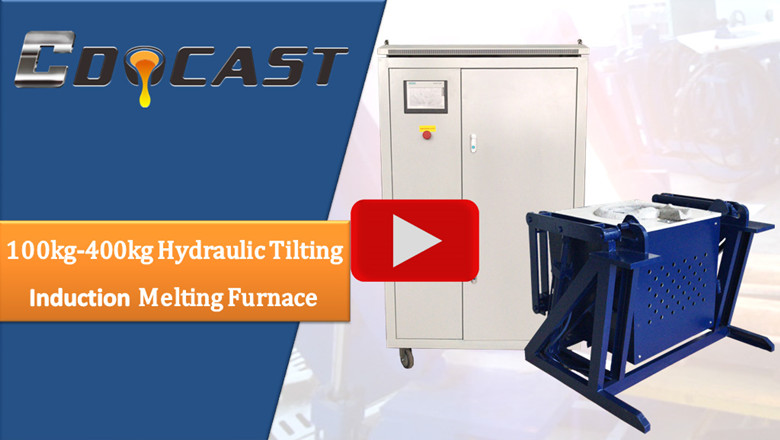
Hydraulic-tilting coreless furnace
- Published capacity direction: 50–350 kg.
- Existing power direction: 45–160 kW.
- Remote hydraulic tilting improves controlled metal transfer.
- Suitable for repeat foundry production after cooling and extraction review.

Industrial coreless induction furnace
- Published project direction: 0.2–5 tonnes per batch.
- Steel-frame or approved shell structure selected for duty.
- For copper-alloy foundries requiring larger batch melting.
- Melt time and kWh/t must be calculated for the actual charge and process.

Channel furnace for holding or casting
- Published direction: 50–500 kg, 45–500 kW.
- Best considered for stable holding and continuous operation.
- Can be engineered with horizontal or vertical copper-alloy casting lines.
- Not a direct substitute for a flexible cold-charge coreless melting furnace.
Furnace-type comparison for copper alloys
| Furnace direction | Best suited to | Published capacity direction | Key advantage | Important limitation |
|---|---|---|---|---|
| Manual-tilting coreless induction | Small batches, laboratories and jobbing foundries | 10–100 kg | Compact layout and direct batch control | Manual handling and batch-by-batch operation |
| Hydraulic-tilting coreless induction | Repeat brass, bronze and copper foundry batches | 50–350 kg | Controlled pouring with remote hydraulic tilting | Requires suitable plant power and cooling |
| Industrial coreless induction | Larger foundry melting and alloy preparation | 0.2–5 t project direction | Fast power response and flexible batch operation | Power, transformer and cooling infrastructure must be verified |
| Channel induction furnace | Holding and integration with continuous casting | 50–500 kg published direction | Efficient stable holding during continuous duty | Needs a maintained molten heel and stable alloy schedule |
| Gas-fired crucible furnace | Sites with economical gas and limited electrical capacity | BX100–BX1000 standard page | No large induction power supply | Combustion, flue, extraction and metal-loss control are essential |
| Silicon-carbide resistance furnace | Selected holding or lower-output projects | Project-specific | Simple electrical heating concept | Heating-element maintenance and slower recovery may limit duty |
Do not compare furnaces by kilograms alone. Batch capacity, hourly melt rate and holding capacity are different specifications. A 500 kg furnace does not automatically melt 500 kg every hour.
How an induction copper melting line works
Prepare the charge
Sort copper or alloy returns, remove moisture and contamination, and confirm whether solid cathode, ingot, scrap or swarf will be charged.
Melt with induction
Electromagnetic energy heats the charge and promotes bath movement. Power is matched to crucible size, alloy and required melt rate.
Control alloy and temperature
Limit overheating and exposure time. Brass requires special attention to zinc loss, fumes and composition control.
Pour or feed casting
Transfer the melt by manual, hydraulic or engineered discharge into ingot molds, sand molds, die-casting equipment or a continuous caster.


Copper, brass and bronze need different process control
Pure copper
Pure copper needs a furnace with adequate superheat capability and a suitable crucible or lining. Oxidation, hydrogen pickup, dross and pouring temperature influence conductivity and casting quality.
Brass
Brass contains volatile zinc. Avoid unnecessary overheating and long holding, and provide effective extraction. Alloy composition and zinc-loss allowance must be defined before the cycle is set.
Bronze
Bronze may contain tin, aluminum, silicon or other additions. Each grade changes fluidity, oxidation behavior, lining compatibility and casting temperature, so “bronze” alone is not enough for sizing.
Equipment and site details to confirm
Electrical and cooling system
- Three-phase voltage, frequency and available transformer capacity.
- Required furnace power and power-cabinet location.
- Closed-loop cooling-water flow, pressure, temperature and quality.
- Protection for water loss, over-current and abnormal temperature.
Crucible, lining and atmosphere
- Crucible or refractory grade compatible with the full alloy range.
- Flux and cleaning practice reviewed for lining life and metal quality.
- Lid, inert-gas or oxidation-control options where required.
- Separate consumables considered when contamination is unacceptable.
Fume extraction and safety
- Local extraction sized for charging, melting and pouring.
- Particular attention to zinc-bearing brass and contaminated returns.
- Dry charge control, PPE, barriers and emergency procedures.
- Floor loading, access and safe clearance around hot-metal transfer.
Pouring and downstream process
- Manual, hydraulic or motor tilting selected from loaded weight.
- Mold or ladle height, pouring side and travel path.
- Integration with ingot casting, sand casting or die casting.
- For rod, tube, bar or plate, review the copper continuous casting line.
What determines copper melting furnace price?
Copper melting furnace price depends on more than nominal batch capacity. The quotation changes with furnace technology, alloy, required kilograms per hour, power supply, tilting structure, cooling system, crucible or lining, extraction, control level, downstream casting equipment, certification and shipping destination.
Process data
Pure copper, brass or bronze grade; charge form; normal and maximum batch; kilograms per hour; shifts and holding time.
Plant utilities
Voltage, frequency, transformer capacity, cooling water, gas specification where applicable, ventilation and floor space.
Supply scope
Furnace body, power supply, cooling equipment, tilting system, crucibles, extraction interface, spares, installation and commissioning.
For a useful 50 kg, 100 kg, 500 kg or 1 ton copper melting furnace quotation, send the alloy and desired hourly output as well as the maximum batch.
Copper melting furnace FAQ
Can one furnace melt copper, brass and bronze?
It can process technically compatible copper alloys when the power, crucible or lining, atmosphere, temperature and extraction suit the full alloy range. Separate consumables may be required to prevent cross-contamination.
What is the melting point of copper?
Pure copper melts at about 1084.6°C. The working and pouring temperatures are higher and depend on alloy, casting method, heat loss and quality requirements; the furnace should not be selected from melting point alone.
Which furnace is best for a small copper foundry?
A compact manual-tilting or hydraulic-tilting coreless induction furnace is often suitable for batch work. Confirm the normal batch, maximum batch, available power, cooling water and mold or ladle position before selecting it.
Coreless or channel induction furnace—which should I choose?
Choose coreless induction for flexible cold-charge melting and alloy changes. Consider a channel furnace for efficient holding or stable continuous-casting duty with a maintained molten heel.
How do I reduce zinc loss when melting brass?
Avoid excessive superheat and long holding, use suitable charge and process practice, cover the bath where technically appropriate, and provide effective fume extraction. The exact cycle depends on brass grade and casting process.
How much power does a copper induction furnace need?
Required power depends on batch, alloy, charge form, starting temperature, target melt time, furnace efficiency and holding duty. Existing catalogue ranges are references; plant transformer capacity must be checked before quotation.
Is furnace capacity the same as hourly output?
No. Capacity is the safe metal quantity held in the furnace. Hourly output also depends on power, charge preparation, hot or cold start, tapping time, refractory condition and the complete operating cycle.
Can a gas-fired furnace melt copper?
Yes, when the burner, crucible, refractory, controls and extraction are designed for copper temperature. Compare the complete fuel, metal-loss, maintenance and production costs with induction before deciding.
What cooling system is required?
Induction equipment normally needs a closed-loop cooling system sized for the power supply and coil. Water flow, pressure, inlet temperature and quality must stay within the confirmed equipment limits.
What information is needed for a quotation?
Send the full alloy, charge form, normal and maximum batch, kilograms per hour, batches per shift, melting or holding duty, voltage, cooling-water conditions, pouring method, destination and required certification.
Configure a copper-alloy melting furnace for your process
Send your alloy, charge, batch, target hourly output, local power or fuel data and downstream casting method. COOLDO will compare the compact, hydraulic, industrial coreless, channel and gas-fired directions before proposing a furnace.